
1. Introduction
Estonia has old towns, digital innovation, and vast ancient forests. It has established itself as one of the most rewarding travel destinations in northern Europe, and in 2026, the number of visitors is at a record high, and one of the question in every visitor who wants to travel in 2026 is whether there Estonia tourist tax?
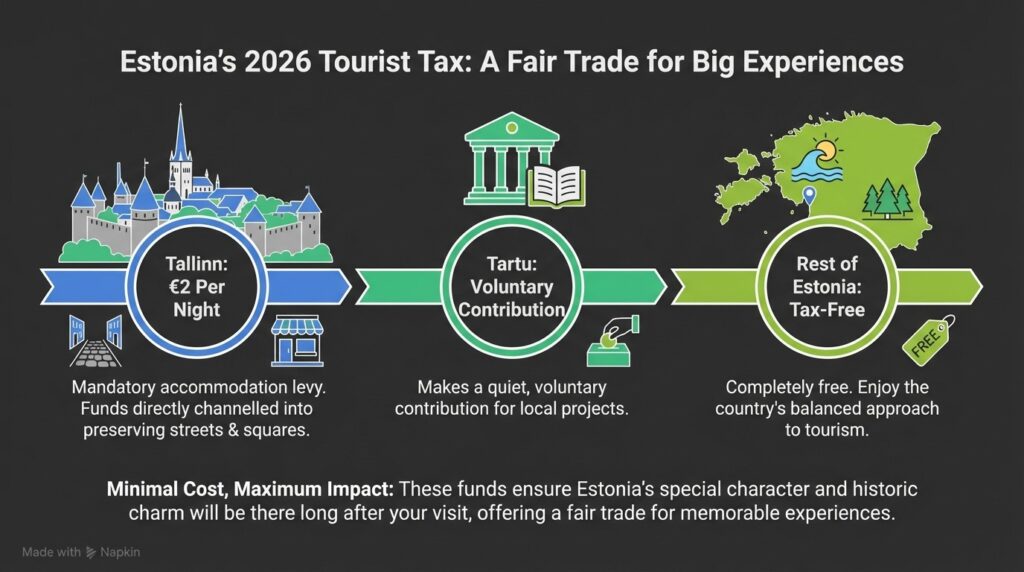
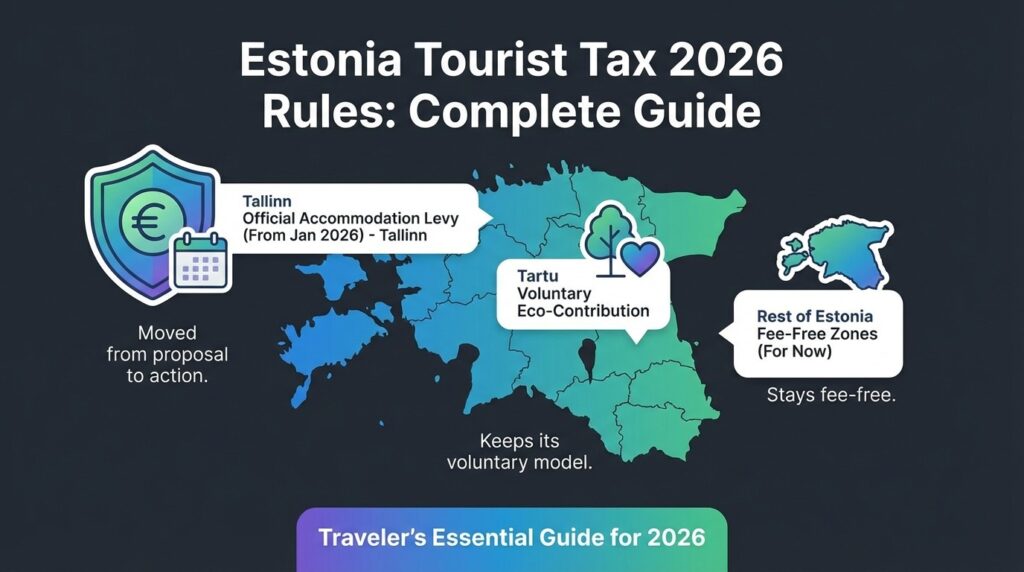
This year marks a genuine shift. Tallinn has moved from an action proposal, officially launching an accommodation levy from January 2026. Tartu keeps its voluntary eco-contribution model, while the rest of the country stays fee-free for now. In this detailed guide, we will explain everything that every traveller should keep in mind before they arrive in Estonia.
2. What are the updated rules of Estonian Tourist tax in 2026?
• Tallinn now charges an official €2 per night accommodation levy from January 2026.
• Tartu continues a voluntary €1 per night contribution at select eco-hotels.
• Some eco-accommodations add small optional sustainability donations.
• Pärnu, Narva, and the islands will remain completely fee-free as of current 2026.
• The National Ecotourism Framework is under review by the government, with a potential rollout in 2027.
3. Tourist Fees by City (2026)
| City / Region | Tourist Fee (2026) | Who Pays | Notes |
|---|---|---|---|
| Tallinn | €2 per night | Adults (18+) | Official – in effect from Jan 2026 |
| Tartu | Voluntary €1 per night Adults | Adults (18+) | Eco-project contributions |
| Pärnu | None (as of 2026) | N/A | Environmental tax still under review |
| Narva | None | N/A | No tourist fees are currently applied |
| Islands (Saaremaa, Hiiumaa) None | N/A | Eco-hotels may add voluntary donations |
■ Travel Tip: Always check the policies of your hotel before starting your tour, and collect some voluntary small green fees even where no city tax applies.
How are these new tax fees collected?
- In Tallinn, hotels and short-term rental platforms collect a €2 levy at check-in or check-out.
- These charges appear as a separate line on your bill.
- In Tartu, The voluntarily €1 contribution is collected by the few practicing eco hotels.
- You can see the payments in your final accommodation bill in both cases.
City by City details
■ Tallinn
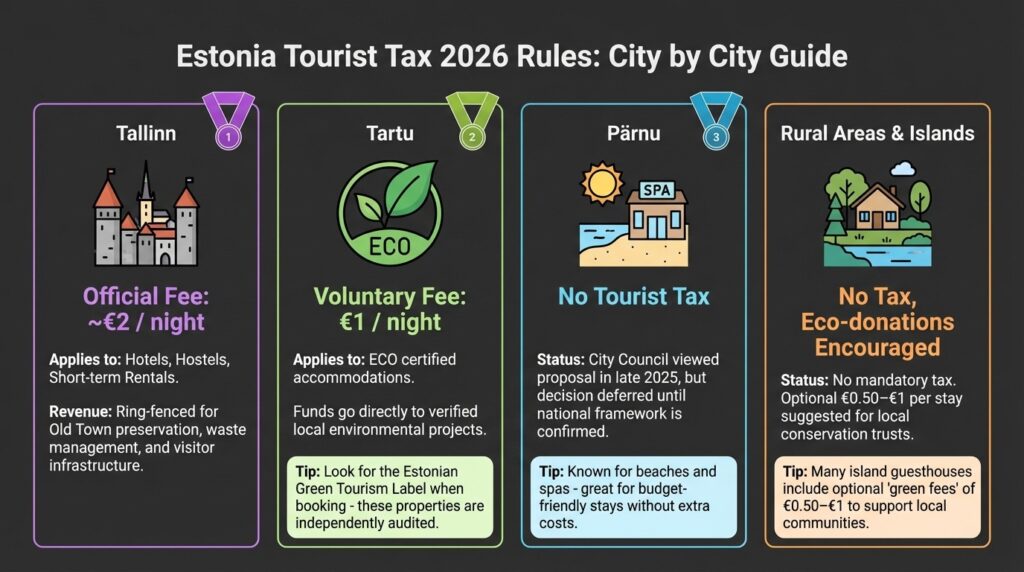
The official fee will be around €2 per night, which applies to hotels, hostels, and short-term rentals. Revenue is a ring-fenced or Old Town preservation, waste management, and visitor infrastructure.
■ Tartu
There will be a voluntary fee of €1 per night at ECO-certified accommodations. The funds will directly go into the verified local environmental projects.
■ Tip: Look for the Estonian Green Tourism Label when booking – these properties are independently audited.
■ Pärnu
There is no tourist tax in this city, but the City Council viewed a proposal to levy in late 2025, but it do differ any decision until our national framework is confirmed
■ Tip: Known for beaches and spas, great for budget-friendly stays without extra costs.
■ Rural Areas & Islands
Status: No tax, but small eco-donations are encouraged. Many guesthouses suggest an optional €0.50–€1 per stay toward local conservation trusts.
■ Tip: Many island guesthouses include optional ‘green fees’ of €0.50–€1 to support local communities.
6. Exemptions
Under Tallinn’s 2026 levy, exemptions will likely cover:
• Children under 18
• Students on educational trips
• Long-term stays (30+ consecutive nights)
• Medical or work-related visits
• Diplomatic and accredited government visitors
7. Why Is Estonia Introducing a Tourist Tax?
Estonia welcomed a record 4.5 million international visitors in 2025, placing real pressure on city infrastructure, particularly in Tallinn’s UNESCO-listed centre. The levy is designed to make tourism self-sustaining rather than extractive. Funds are directed toward:
- Waste collection in high-footfall tourist zones.
- Restoration of historic sites and heritage architecture.
- Green tourism and accessibility initiatives.
- Improved visitor infrastructure across the city.
8. Estonia Tourist Tax News (2026)
| Possible nationwide eco-fee starting in 2027 | Impact on Travelers |
| Tallinn levy live January 2026 | €2 per night is mandatory for all adult visitors |
| Tartu eco-program expands | More hotels enrolled; new urban green projects funded |
| Government consultation ongoing | Possible nationwide eco-fee starting in 2027 |
| Record 2025 visitor numbers | Estonia expects continued growth, driving further reform |
Tips for travelers to Estonia in 2026
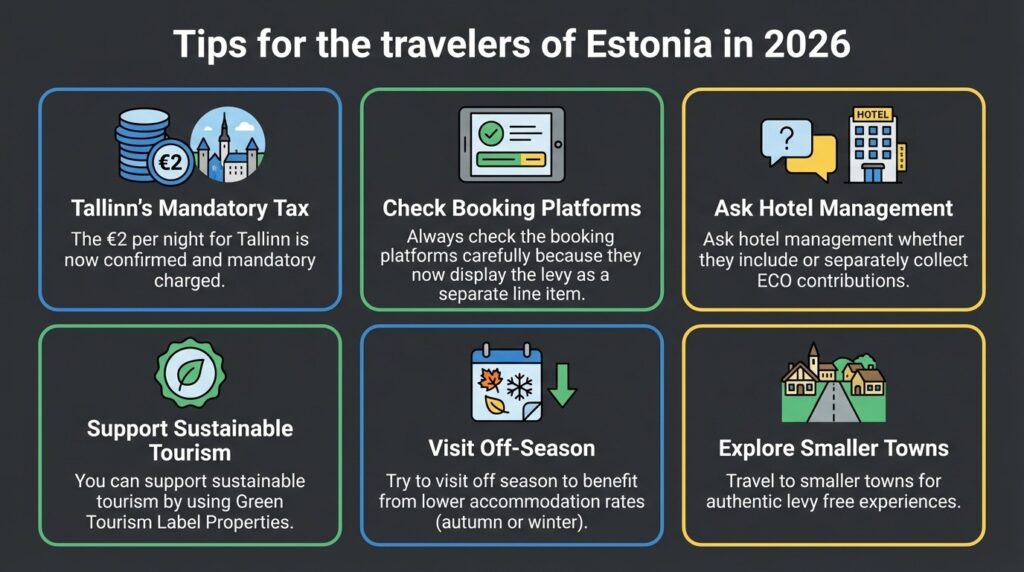
- The €2 per night for Tallinn is now confirmed and mandatory to charge.
- Always check the booking platforms carefully because they now display the levy as a separate line item.
- Ask hotel management whether they include or separately collect ECO contributions.
- You can support sustainable tourism by using Green Tourism Label Properties.
- Try to visit off-season to benefit from lower accommodation rates (autumn or winter). Travel to smaller towns for authentic, levy-free experiences.
10. FAQs
Q1. Is there a tourist tax in Estonia in 2026?
■ Yes Tallinn now charges a mandatory €2 per night levy. Tartu has a voluntary €1 contribution at eco-hotels.
Q2. How much will it cost?
■ €2 per persona per notte a Tallinn. €1 voluntarily in Tartu. All other regions remain fee-free.
Q3. Who has to pay it?
■ Adult visitors aged 18 and over, staying in any registered accommodation in Tallinn.
Q4. Why is Estonia adding a tax?
■ To fund sustainable tourism, preserve cultural heritage, and manage rising visitor numbers responsibly.
Q5. Which cities are affected?
■ Tallinn (mandatory fee) and Tartu (voluntary contributions). All other regions have no tourist tax.
11. Comparison Table: Baltic Tourist Taxes (2026)
| Country | Tourist Tax (Average) | Notes |
| Estonia | €0–€2 (city-dependent) | Tallinn mandatory; Tartu voluntary; rest fee-free |
| Latvia | €1–€2 | Already applied in Riga and major tourist areas |
| Lithuania | €1 | Charged in Vilnius hotels |
| Finland | None | Formal introduction under review for 2027 |
■ Insight: Estonia now joins its Baltic neighbours in applying visitor levies, though its city-first approach keeps costs low and geographically limited.
12. Conclusion
Now in 2026 Estonian tourism tax is no longer a proposal anymore, especially in Tallinn, where the city’s €2 per night accommodation levy is now live. The funds are directly channelled into the preservation of streets and squares due to the millions of visitors came each year. Tartus voluntarily makes a quiet contribution in the background while the rest of the country remains completely free.
For travelers, the cost is minimal and genuinely well spent. Whether you’re wandering Tallinn’s medieval lanes, catching a lecture-town vibe in Tartu, or breathing in the salt air along Pärnu’s coast, Estonia’s balanced approach to tourism funding means the things that make it special will still be there long after your visit. It really feels like a fair trade or small levy for big experiences.